 Inquiry
 Shipping address



Nisshinbo Micro Devices Inc. NJU72342V-TE2

NJU72342V-TE2 Product Description
The NJU72342V-TE2 from Nisshinbo Micro Devices Inc. is a four-channel electronic volume control integrated circuit designed for audio signal processing applications. It combines low-noise, low-distortion buffer amplifiers with digitally controlled volume adjustment, enabling precise audio level control through an I²C serial interface.
The NJU72342V-TE2 supports an attenuation range from 0 dB to -95 dB in 1 dB increments, together with a mute function and selectable input gain settings of 0 dB, +3 dB, +6 dB, and +9 dB. Its four-channel architecture makes it suitable for multichannel audio equipment, home theater systems, audio receivers, and other consumer audio products requiring coordinated electronic volume adjustment.
Operating from a single 4.5 V to 14.5 V supply and housed in a compact 14-pin SSOP package, the NJU72342V-TE2 helps simplify audio control circuitry while supporting low noise, low distortion, and microcontroller-based system integration.
Technical Context
Within an audio signal chain, the NJU72342V-TE2 operates between the audio source or preceding signal-conditioning stage and the downstream audio amplifier. Its four analog input channels receive audio signals, while the integrated electronic volume circuits adjust their levels according to commands sent by a system microcontroller over the I²C bus.
The device provides four corresponding analog outputs, allowing separate audio channels to be controlled within a single IC. The available gain settings support input-level adjustment, while the programmable attenuation range provides fine volume control. Zero-cross detection is incorporated to help reduce audible switching disturbances during volume changes under appropriate operating conditions.
An external MUTE control provides an additional way for the system to mute the audio path independently of normal volume settings. This is useful during power-up sequencing, source transitions, and standby control, provided that the surrounding circuit implements the required logic.
For system designers, the main integration considerations include I²C address and command handling, the electrical characteristics of the control bus, analog input and output coupling, reference-voltage stability, supply decoupling, grounding, and compatibility with the following amplifier stage. The NJU72342V-TE2 is an analog audio level-control device rather than a digital audio processor: it does not replace a digital-to-analog converter, a digital signal processor, or a power amplifier.
Key Specifications
| Number of Channels | 4 channels, enabling four analog audio paths to be controlled by one IC and reducing the need for separate volume-control devices. |
|---|---|
| Operating Supply Voltage | 4.5 V to 14.5 V, allowing integration into audio equipment with a compatible single-supply power architecture. |
| Volume Attenuation Range | 0 dB to -95 dB in 1 dB steps, with a mute setting, providing fine-grained electronic volume adjustment across a wide audio level range. |
| Selectable Input Gain | 0 dB, +3 dB, +6 dB, or +9 dB, allowing the input signal level to be adjusted to suit different audio sources and system gain structures. |
| Total Harmonic Distortion | 0.002% typical under the datasheet's specified test conditions, helping preserve audio waveform fidelity during level adjustment. |
| Output Noise Voltage | 2.0 µVrms typical at 0 dB main volume under specified test conditions, helping limit unwanted background noise in sensitive audio signal paths. |
| Control Interface and Temperature | I²C bus control with standard-mode operation up to 100 kHz and fast-mode operation up to 400 kHz; operating temperature from -40°C to +85°C, supporting microcontroller-based control across a broad range of equipment environments. |
Electrical performance values are based on the manufacturer's NJU72342 datasheet. Typical values are measured under specified conditions and should not be interpreted as guaranteed limits under every supply voltage, load, or temperature.
Pinout & Package
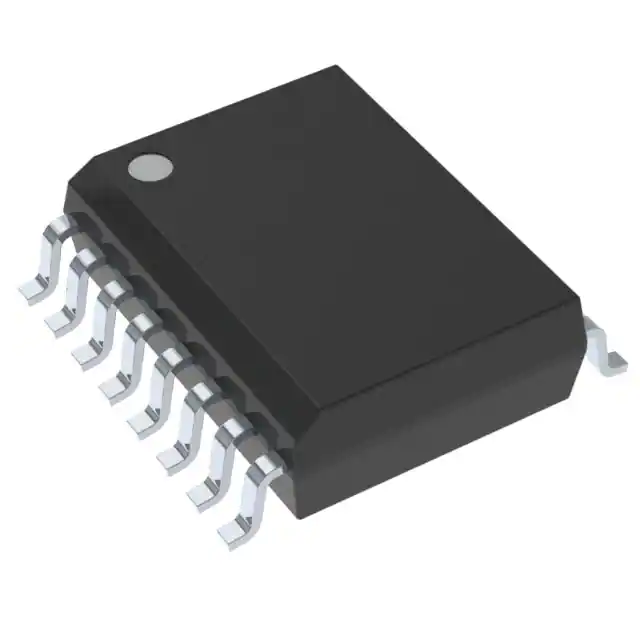
The NJU72342V-TE2 uses a 14-pin SSOP surface-mount package. Its compact footprint supports space-efficient audio circuit layouts, while the separate analog input and output pins simplify integration into multichannel signal paths. The TE2 ordering suffix identifies the manufacturer's packaging option; confirm the exact ordering and assembly requirements against the official documentation.
NJU72342V-TE2 pinout:
| Pin | Signal | Function |
|---|---|---|
| 1 | IN1 | Analog audio input for channel 1. |
| 2 | IN2 | Analog audio input for channel 2. |
| 3 | IN3 | Analog audio input for channel 3. |
| 4 | IN4 | Analog audio input for channel 4. |
| 5 | MUTE | External mute control; a high level activates mute, while a low level disables it. |
| 6 | SDA | I²C serial data input and acknowledge output. |
| 7 | SCL | I²C serial clock input. |
| 8 | V+ | Positive power-supply input. |
| 9 | VREF | Internal reference-voltage terminal; follow the datasheet's reference decoupling recommendations. |
| 10 | GND | Ground reference for the device. |
| 11 | OUT4 | Analog audio output for channel 4. |
| 12 | OUT3 | Analog audio output for channel 3. |
| 13 | OUT2 | Analog audio output for channel 2. |
| 14 | OUT1 | Analog audio output for channel 1. |
For NJU72342V-TE2 pinout design, use the official package drawing to verify pin 1 orientation, package dimensions, and recommended PCB land pattern. Provide appropriate supply bypassing and reference decoupling, keep sensitive analog audio traces away from noisy switching nodes, and establish a suitable ground-return layout. The datasheet's example circuit shows 10 µF capacitors for supply and reference decoupling and 2.2 µF coupling capacitors in the illustrated signal paths; confirm the appropriate values for the actual application.
The I²C interface requires compatible logic levels and suitable bus pull-up resistors. Check the controller voltage, bus capacitance, and timing requirements before connecting SDA and SCL. Do not exceed the device's supply or input-voltage limits.
Key Features
- Four-channel electronic volume control: Controls four analog audio paths within one IC, helping reduce component count and simplify volume management in multichannel receivers and home theater equipment.
- Fine 1 dB attenuation steps: Provides volume adjustment from 0 dB to -95 dB with a mute setting, enabling consistent user volume control in televisions, audio receivers, and integrated sound systems.
- Low-noise, low-distortion audio path: Integrates buffer amplifiers with typical output noise of 2.0 µVrms and typical total harmonic distortion of 0.002% under specified conditions, helping preserve signal quality in consumer audio circuitry.
- I²C digital control: Allows a microcontroller to configure volume and gain through a two-wire serial interface, reducing the need for separate analog control circuitry in digitally managed audio products.
- Zero-cross detection: Supports volume changes around audio signal zero crossings to help reduce audible switching artifacts, particularly in equipment where smooth level transitions are important.
- External mute control: Provides a dedicated hardware mute input, allowing system controllers to coordinate audio muting during startup, shutdown, and operating-mode transitions.
- Wide supply-voltage range and compact package: Operates from 4.5 V to 14.5 V in a 14-pin SSOP package, supporting integration into space-constrained audio control boards with a compatible power supply.
Applications
|
Home Theater and AV Receivers
Use scenario: Multichannel home theater receivers and audio-video equipment that require electronic control of multiple analog audio paths. IC role: Adjusts the levels of four analog channels through I²C commands from the receiver's main controller. Value: Centralizes volume adjustment in one device and supports coordinated level control in compatible multichannel audio designs. |
Televisions and Consumer Audio Systems
Use scenario: Television audio boards, integrated sound systems, and consumer electronics with analog audio processing stages. IC role: Provides digitally controlled attenuation and selectable input gain between the audio source circuitry and downstream amplification. Value: Enables microcontroller-managed volume settings without requiring a separate analog potentiometer for each controlled channel. |
|
Multichannel Amplifier Systems
Use scenario: Audio equipment with multiple analog inputs or independently controlled audio channels ahead of power amplification. IC role: Sets the signal level of four channels before the downstream amplifier stages. Value: Helps simplify multichannel gain management and maintain a consistent electronic volume-control interface across supported channels. |
Audio Mixing and Signal Distribution Equipment
Use scenario: Compact audio mixers, audio routing units, and signal distribution products that need microcontroller-controlled analog level adjustment. IC role: Applies programmable attenuation and gain to four analog signal paths under host-controller supervision. Value: Provides repeatable electronic level settings and a hardware mute option, subject to the system's audio routing and performance requirements. |
These are potential application areas based on the device's documented functions, not a claim that the manufacturer has qualified the IC for every product in each category. Verify channel configuration, signal levels, noise requirements, supply conditions, and downstream loading before selecting the device.
Equivalent & Alternatives
When searching for an NJU72342V-TE2 equivalent, compare channel count, volume attenuation range, gain settings, control interface, supply voltage, analog performance, package, and pin assignment. Similar product descriptions do not establish direct interchangeability.
- NJU72341 - Two-channel electronic volume: This related Nisshinbo device uses I²C control, supports a 4.5 V to 14.5 V supply, and provides a 0 dB to -95 dB volume range in 1 dB steps. Compared with the NJU72342V-TE2, it controls two channels rather than four. It may suit stereo applications, but it is not a functional replacement when four independently controlled channels are required.
- NJU72343 - Eight-channel electronic volume: This related product provides eight channels and a different operating-voltage architecture, with a listed volume range from +31.5 dB to -95 dB in 0.5 dB steps and a two-wire serial interface. Compared with the NJU72342V-TE2, it offers more channels and finer attenuation increments but requires a different supply arrangement and package. It is a possible alternative for a redesigned system, not a drop-in replacement.
- NJU72344 - Two-channel electronic volume: This related Nisshinbo device provides two channels, a 0 dB to -95 dB attenuation range in 1 dB steps, and additional selectable gain settings. Its two-wire serial control and bipolar supply requirements differ from the NJU72342V-TE2's I²C-controlled, single-supply design, so the surrounding circuitry must be reviewed before considering substitution.
NJU72342V-TE2 vs NJU72341: The main distinction is four-channel versus two-channel control. The NJU72342V-TE2 is more appropriate when four analog channels must be managed in one IC, whereas the NJU72341 may be sufficient for a two-channel design.
NJU72342V-TE2 vs NJU72343: The NJU72343 offers eight channels and finer volume increments, but its supply architecture and package differ. It is worth evaluating when a design needs additional channels and can accommodate the electrical and layout changes.
Selection advice: If the existing PCB or bill of materials specifies NJU72342V-TE2, sourcing the exact part is the lowest-risk option. For a new design, select an alternative only after confirming the number of channels, analog signal requirements, I²C compatibility, supply rails, mute behavior, package dimensions, and pinout. Neither NJU72341, NJU72343, nor NJU72344 should be treated as a direct drop-in substitute without a full design review.
Quality & Component Verification
For NJU72342V-TE2 procurement, component authenticity, handling, and traceability are important because noise, distortion, and channel performance can affect the overall quality of the finished audio product.
- Originality: Prioritize components from authorized distribution channels or qualified suppliers with documented sourcing procedures. Review manufacturer labels, package markings, lot information, and purchasing records. Visual inspection alone cannot conclusively prove authenticity.
- Inspection and testing: Incoming inspection can check packaging condition, marking consistency, pin condition, and evidence of handling damage. Where required, electrical testing can assess supply current, volume-control response, audio noise, distortion, and channel operation using a documented test procedure.
- ESD protection: Handle and store the device using appropriate electrostatic-discharge controls, including grounded workstations, suitable packaging, and trained handling procedures. Follow the manufacturer's current handling guidance rather than assuming an unverified ESD rating.
- Traceability: Retain supplier records, purchase documentation, available lot and date-code information, and inspection or test reports to support quality investigations and customer qualification requirements.
Any inspection or test report should accurately state the tests performed and their limitations. Independent testing does not, by itself, establish manufacturer authorization or guarantee that a component is original.
Availability & Supply Support
The availability of NJU72342V-TE2 can vary with distributor inventory, production schedules, order quantities, and regional supply conditions. Buyers should confirm current stock, lead time, packaging format, date-code requirements, and delivery terms before placing an order.
E-BEST INDUSTRIAL (HK) CO., LIMITED supports electronic component sourcing for urgent requirements, long-lead-time parts, and components that are difficult to obtain through standard channels. Depending on market conditions and supplier confirmation, support can include stock searches, quotation comparisons, batch procurement, delivery coordination, and inspection arrangements.
For production orders, provide the required quantity, target delivery date, acceptable date-code range, and any traceability or inspection requirements. Batch supply and long-term sourcing arrangements can be evaluated against actual supplier capacity; stable availability should not be assumed without confirmation.
Manufacturer Information
Nisshinbo Micro Devices Inc. is a semiconductor manufacturer with products covering analog integrated circuits, power management, audio signal processing, RF devices, and other electronic components. Its audio portfolio includes electronic volume controllers and related signal-processing devices for consumer and other electronic equipment.
The NJU72342V-TE2 demonstrates the manufacturer's analog audio design capabilities through its four-channel architecture, I²C-based volume control, zero-cross detection, and low-noise, low-distortion signal path. Engineers should use the official datasheet for electrical design and qualification rather than relying exclusively on distributor summaries.
Frequently Asked Questions
Where can I find the NJU72342V-TE2 datasheet download?
The official NJU72342 datasheet is available from Nisshinbo Micro Devices. It provides the electrical specifications, pin configuration, application circuit, I²C timing information, control behavior, and package details needed for design and verification. Download the NJU72342 datasheet PDF.
What should engineers know about NJU72342V-TE2 pinout design?
The device uses a 14-pin SSOP package. Pins 1 to 4 are analog inputs, Pin 5 is the external mute control, Pins 6 and 7 are the I²C data and clock connections, Pin 8 is the positive supply, Pin 9 is the reference terminal, Pin 10 is ground, and Pins 11 to 14 are the four analog outputs. Follow the official package drawing, coupling-capacitor recommendations, reference decoupling, and supply bypassing guidance when designing the PCB.
What is the NJU72342V-TE2 application?
The NJU72342V-TE2 is designed for four-channel electronic audio volume control. Potential applications include home theater receivers, televisions, multichannel amplifier systems, and audio signal distribution equipment that require digitally controlled analog volume adjustment.
How does the NJU72342V-TE2 control audio volume?
A microcontroller sends control commands through the I²C bus to set the volume attenuation and input gain. The IC supports attenuation from 0 dB to -95 dB in 1 dB steps, plus a mute setting, allowing the system to adjust audio levels without a separate analog volume potentiometer for each channel.
Can the NJU72341 replace the NJU72342V-TE2?
Not as a direct functional replacement in a four-channel design. The NJU72341 is a two-channel electronic volume controller, whereas the NJU72342V-TE2 provides four channels. A substitution may require changes to the circuit architecture, firmware, and PCB, depending on the application.
What is the difference between NJU72342 and NJU72342V-TE2?
NJU72342 identifies the underlying device and its electrical functionality. NJU72342V-TE2 is the specific ordering part number used for the packaged component. Check the manufacturer's ordering and packaging documentation when matching purchasing records, assembly requirements, and inventory labels.
How can buyers verify NJU72342V-TE2 component quality?
Review sourcing records, package markings, available lot information, and supplier traceability documentation. Depending on the risk level, perform incoming inspection and electrical testing using a defined procedure. No single visual check can conclusively establish authenticity, and any claims of testing or certification should be supported by actual records.
NJU72342V-TE2 Details
NJU72342V-TE2 Relevant Information
Please send RFQ.
Fill out the form below and our sales team will contact you as soon as possible.
Contact Us
Your dedicated customer service team is ready to support you.
- Telephone
- +86 13510572937
- candy@ebest-hk.com


General Inquiry


2319218+
Product Quantity

200+
Brands Under Management

20+
Years in Business

30+
Countries & Regions Covered