 Inquiry
 Shipping address



Quality Control
At E-BEST, we believe that supply chain quality begins long before components arrive at our facility. Our Supplier Qualification & Management Framework is built to prevent counterfeit parts, eliminate gray-market risks, and ensure full traceability across the electronics supply chain. By separating supplier onboarding from long-term governance, we guarantee that only highly qualified, compliant, and trustworthy vendors enter our Approved Supplier Network.
Surface & Packaging
Integrity Verification
From the moment components arrive, we enforce rigorous visual and packaging integrity verification. Labels, date codes, surface markings and packaging structures are systematically reviewed to identify signs of refurbishment, resealing, or irregular handling. This forms the first barrier against supply chain risks and ensures only compliant materials move forward.
Visual Inspection (VI)
Marking and Label Authenticity Check
Packaging & Labeling Verification (Reel/Tray/Bag Inspection)
Tape & Reel Inspection (Orientation, Cover Tape Integrity)
Lead Coplanarity Measurement
Surface Defect Inspection (Optical Microscopy)
Moisture Indicator Card (MIC) Verification
Dimensional Measurement (Package Geometry Audit)
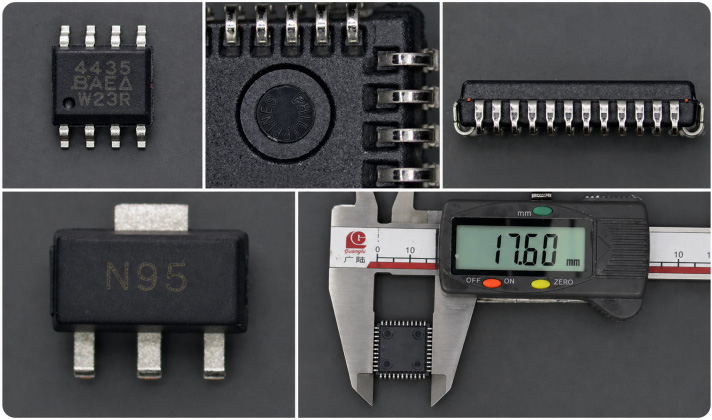
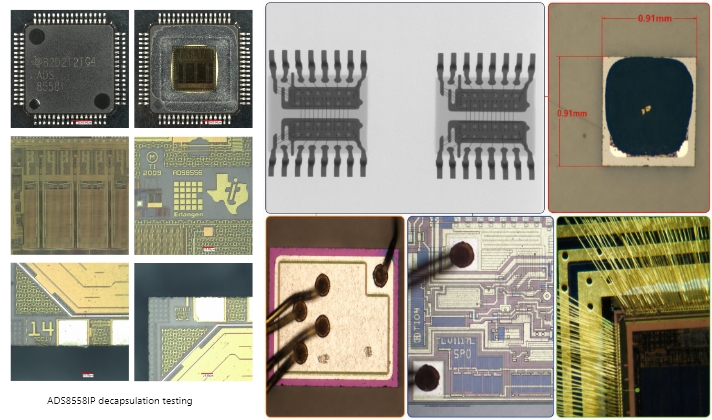
Internal Structure Consistency Analysis
Internal structural conformity is a critical indicator of authenticity and reliability. Through multi-layer and multi-angle structural evaluations, we verify die layout, bonding patterns and internal configurations to ensure consistency with OEM specifications-eliminating counterfeit and altered components at the earliest stage of screening.
X-Ray Imaging (Wire Bond, Die Placement, Voids)
3D Computed Tomography (3D-CT)
Scanning Acoustic Microscopy (SAM) – Delamination / Void Detection
Decapsulation (Decap)
Wire Bond Integrity Inspection
Layer-by-Layer Delayering Analysis
Internal Gas Analysis (IGA)
Back-Grinding and Cross-Section Analysis
Metallographic Sectioning (Microsection Analysis)
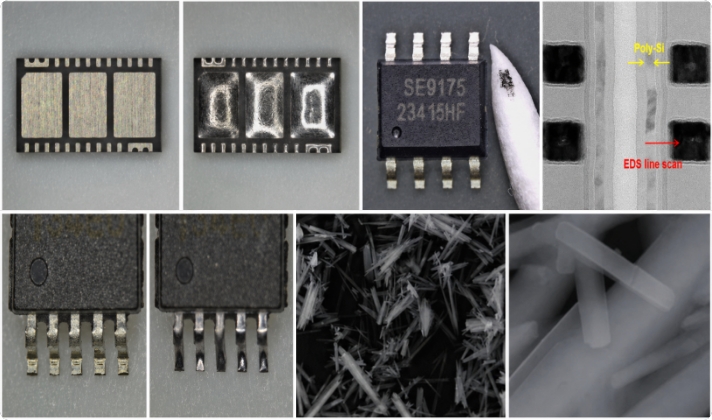
Material & Elemental Composition Authentication
Material anomalies often reveal hidden risks. By analyzing chemical signatures and elemental composition, we confirm whether metals, solder layers and packaging materials align with OEM requirements. This step identifies refurbished or mixed components while also ensuring compliance with international environmental regulations (e.g., RoHS).
RoHS / Hazardous Substance Screening
Heavy Metal Analysis
Chemical Extraction Test
Heated Chemical Test (HCT)
Energy Dispersive X-ray Spectroscopy (EDX/EDS)
Fourier Transform Infrared Spectroscopy (FTIR)
X-Ray Fluorescence Analysis (XRF)
Plating Material & Thickness Measurement
Thin-Film Material Characterization
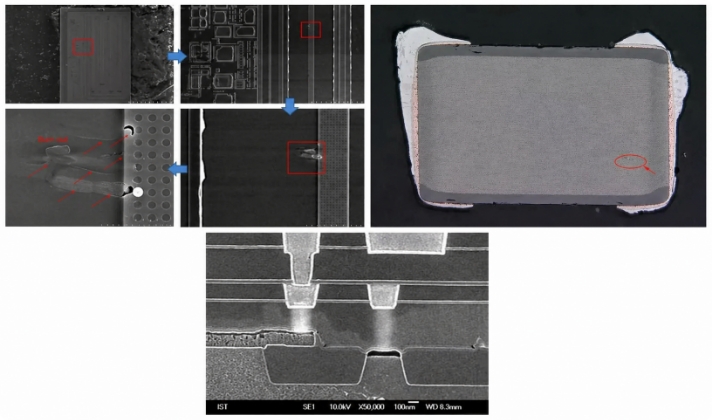
Package, Mold & Process Integrity Review
The integrity of packaging and mold characteristics directly reflects manufacturing origin and production quality. We review mold markings, package consistency, process traces and surface textures to confirm that components originate from legitimate production batches rather than unauthorized or secondary processing sources.
Encapsulation Material Integrity Analysis
Package Crack and Void Detection
Hermeticity / Seal Integrity Test
Particle Impact Noise Detection (PIND)
Bond Pull & Shear Test (MIL-STD-883 compliant)
Cross-Sectional Analysis (Package, Lead, BGA)
Process Consistency Check (Coating, Mold, Lead Finish)
Solder Ball / BGA Joint Reliability Inspection
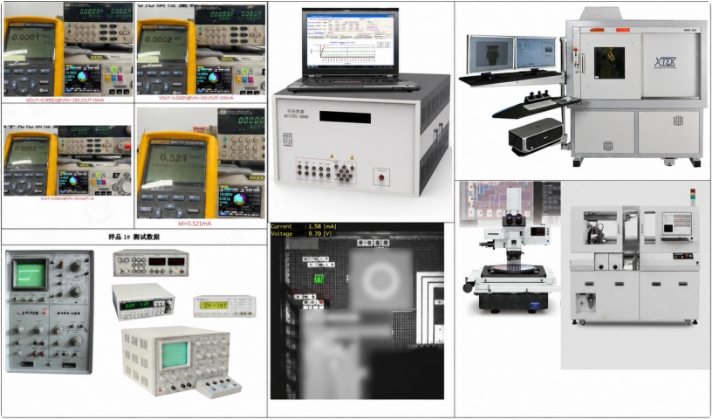
Electrical Characteristics & Performance Validation
Visual conformity alone is insufficient-electrical behavior determines true reliability. Through static and dynamic performance validation, we measure response behavior, leakage levels, conduction parameters and load performance to ensure full alignment with OEM specifications and stability under real-world operating conditions.
Basic Electrical Characterization (I-V Curve, Leakage, Resistance)
Functional Testing (ICT / Functional Verification)
Continuity & Pin-to-Pin Test
Electrostatic Discharge Susceptibility (ESD Test)
Semiconductor Parametric Analysis
OBIRCH – Laser-Induced Thermal Defect Localization
Thermal EMMI (Emission Microscopy)
First Article Test (FAT / FT)
Programming Verification (MCU / FPGA)
Timing, Frequency & Signal Integrity Analysis
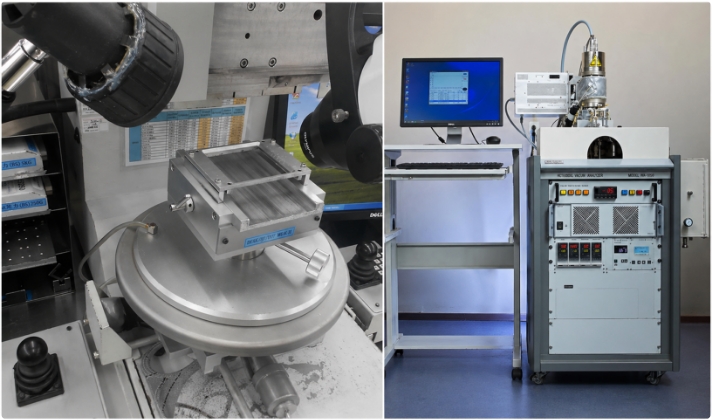
Thermal, Mechanical & Environmental Reliability Assessment
Electronic components must withstand heat, humidity, pressure and mechanical stress across global supply chains. By simulating these conditions, we validate thermal resilience, mechanical durability and environmental adaptability, ensuring long-term reliability in demanding applications such as industrial automation, automotive electronics and communication systems.
Thermal Shock Test (TST)
Temperature Cycling (TC)
Temperature-Humidity Bias Test (THB / 85°C 85% RH)
Baking (Moisture Reduction)
Vibration & Mechanical Shock Test
Temperature Stress Test (TST / HTOL-type variants)
Burn-In Test (Aging / Reliability Stress)
Transportation Simulation Test
Comprehensive Authentication & Supply Chain Risk Screening
We consolidate inspection results into an integrated authentication framework and assign risk tiers based on combined evidence. The outcome is not just a test report—it is a strategic decision-making tool that enhances procurement transparency, mitigates supply chain risk and prevents quality incidents before they occur.
General Inquiry


2319218+
Product Quantity

200+
Brands Under Management

20+
Years in Business

30+
Countries & Regions Covered